
Table of Contents
- Understanding Vendor Management
- Why Vendors Have Become Critical Business Partners
- The Hidden Cost of Poor Vendor Management
- Managing Costs More Effectively
- Improving Service Quality
- Strengthening Business Continuity
- Enhancing Communication and Collaboration
- The Importance of Vendor Data Management
- Risk Management and Compliance
- Why Vendor Performance Tracking Matters
- Supporting Organizational Growth
- Building Stronger Vendor Relationships
- The Role of Technology in Vendor Management
- Practical Steps to Improve Vendor Management
- Centralize Vendor Information
- Define Performance Expectations
- Conduct Regular Reviews
- Strengthen Communication
- Monitor Risks
- Frequently Asked Questions
- What is vendor management?
- Why is vendor management important?
- What are the risks of poor vendor management?
- How does vendor management improve business continuity?
- What information should organizations track about vendors?
- Conclusion
- Explore Smarter Vendor Management Solutions
In today's interconnected business environment, no organization operates entirely on its own. Every company, regardless of size or industry, relies on external vendors, suppliers, contractors, service providers, consultants, and partners to support daily operations. From raw materials and office supplies to software services, logistics, maintenance, and professional consulting, vendors play a critical role in helping businesses function effectively.
As organizations continue to grow and expand, vendor relationships have become increasingly important. Businesses are no longer simply purchasing products or services. They are building long-term partnerships that directly influence operational efficiency, customer satisfaction, profitability, and business continuity.
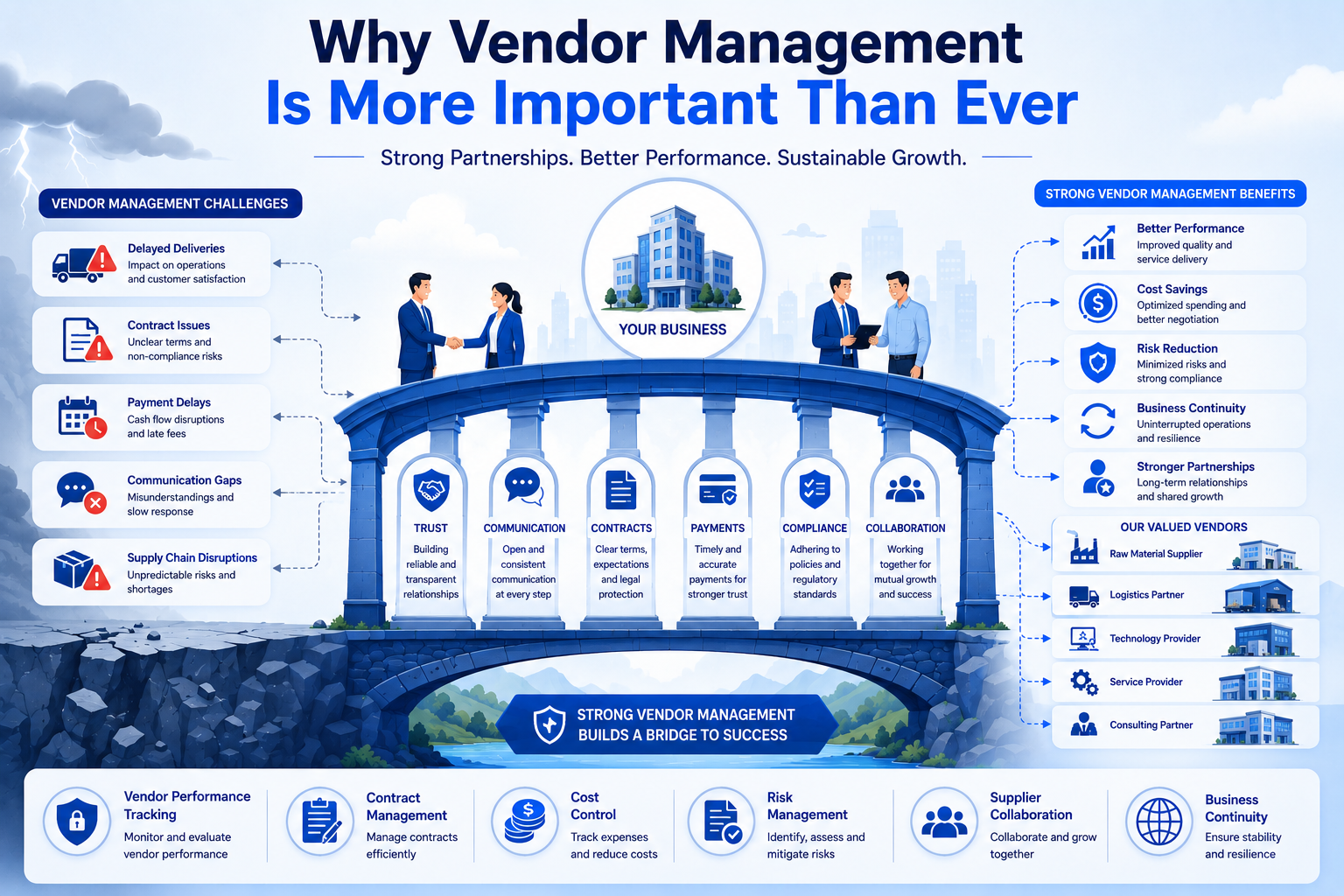
However, managing vendors effectively is becoming more challenging than ever. Organizations often work with dozens or even hundreds of vendors simultaneously. Each relationship involves contracts, invoices, performance monitoring, communication, compliance requirements, payment schedules, and risk management considerations.
Without a structured approach to vendor management, organizations can quickly encounter problems such as delayed deliveries, inconsistent service quality, compliance risks, increased costs, and operational disruptions.
In an era where efficiency, transparency, and business resilience are more important than ever, vendor management has become a strategic priority rather than a simple administrative task.
The organizations that invest in strong vendor management practices are often better positioned to reduce risks, improve performance, control costs, and build sustainable growth.
Understanding Vendor Management
Vendor management refers to the process of selecting, onboarding, monitoring, evaluating, and maintaining relationships with external suppliers and service providers.
Its purpose is to ensure that vendors consistently deliver value while meeting organizational requirements and expectations.
Vendor management involves much more than simply paying invoices or signing contracts.
It includes activities such as:
- Vendor selection
- Performance monitoring
- Risk assessment
- Contract management
- Communication management
Effective vendor management helps organizations maximize the value they receive from their vendors while minimizing operational and financial risks.
As business ecosystems become more complex, these responsibilities continue to grow in importance.
Why Vendors Have Become Critical Business Partners
In the past, vendors were often viewed as external entities that simply supplied products or services.
Today, that perspective has changed significantly.
Many organizations depend on vendors for essential functions such as:
- Technology infrastructure
- Manufacturing support
- Logistics operations
- Human resource services
- Financial consulting
In some cases, vendor performance directly affects customer experiences.
If a supplier fails to deliver materials on time, production schedules may be delayed.
If a software provider experiences downtime, employee productivity may suffer.
If a logistics partner encounters disruptions, customers may experience delivery delays.
These examples highlight the growing influence vendors have on organizational success.
Vendor relationships have evolved from transactional interactions into strategic partnerships.
The Hidden Cost of Poor Vendor Management
Many organizations underestimate the consequences of poor vendor management.
Initially, issues may seem minor.
A delayed invoice, missed delivery, or communication breakdown may appear manageable.
However, over time, these small problems can create significant operational challenges.
Common consequences include:
- Increased costs
- Reduced efficiency
- Service disruptions
Organizations may spend valuable time resolving vendor-related issues rather than focusing on strategic priorities.
Poor vendor management can also affect customer satisfaction, employee productivity, and financial performance.
The hidden costs often become apparent only after operational problems begin to accumulate.
Managing Costs More Effectively
Cost control remains a top priority for organizations of all sizes.
Vendor relationships directly influence spending across multiple departments.
Without proper oversight, organizations may experience:
- Duplicate purchases
- Unnecessary expenses
- Contract inconsistencies
Effective vendor management provides greater visibility into vendor-related spending.
This visibility helps organizations identify opportunities to:
- Negotiate better terms
- Consolidate vendors
- Reduce unnecessary costs
When vendor information is organized and accessible, financial planning becomes more accurate and predictable.
Cost management is not simply about spending less. It is about spending more strategically.
Improving Service Quality
Vendor performance has a direct impact on business operations.
Organizations rely on vendors to deliver products and services that meet established quality standards.
When performance expectations are unclear or monitoring is inconsistent, service quality may decline.
Common challenges include:
- Delayed deliveries
- Incomplete work
- Quality issues
Effective vendor management helps organizations establish clear expectations and performance metrics.
Regular evaluations encourage accountability and continuous improvement.
Strong vendor relationships often result in better service quality and more reliable outcomes.
Strengthening Business Continuity
Business continuity depends on reliable vendor relationships.
Organizations frequently rely on external providers for critical operations.
If a vendor experiences disruptions, the impact can quickly spread throughout the organization.
Potential disruptions include:
- Supply chain interruptions
- Technology failures
- Resource shortages
Vendor management helps organizations identify potential risks and develop contingency plans.
Having visibility into vendor capabilities and dependencies improves preparedness.
Organizations that actively manage vendor risks are often better equipped to maintain continuity during unexpected events.
Enhancing Communication and Collaboration
Strong communication is essential for successful vendor relationships.
Misunderstandings, unclear expectations, and delayed responses can create operational challenges.
Vendor management encourages structured communication processes that improve collaboration.
Benefits include:
- Faster issue resolution
- Better information sharing
- Stronger partnerships
When organizations and vendors communicate effectively, they can work together more efficiently toward shared goals.
Collaboration often leads to improved performance and long-term success.
The Importance of Vendor Data Management
As organizations work with larger numbers of vendors, managing information becomes increasingly important.
Vendor records often include:
- Contracts
- Contact information
- Payment details
- Performance reports
Without proper organization, locating and updating vendor information can become difficult.
Centralized vendor data management improves visibility and supports informed decision-making.
Organizations gain a clearer understanding of vendor relationships, performance trends, and operational dependencies.
Accurate information is essential for effective vendor oversight.
Risk Management and Compliance
Regulatory requirements continue to evolve across industries.
Organizations are increasingly responsible for ensuring that vendors comply with relevant standards and regulations.
Vendor-related risks may involve:
- Data security
- Financial stability
- Legal compliance
Failure to manage these risks can create significant consequences.
Effective vendor management includes ongoing assessments and monitoring activities that help organizations identify potential issues before they become major problems.
Proactive risk management supports both compliance and operational resilience.
Why Vendor Performance Tracking Matters
Performance tracking helps organizations evaluate whether vendors are meeting expectations.
Without measurement, it can be difficult to determine which vendors consistently deliver value.
Key evaluation areas often include:
- Delivery performance
- Service quality
- Responsiveness
Tracking performance provides valuable insights that support vendor selection and improvement efforts.
Organizations can identify top-performing vendors while addressing issues with underperforming suppliers.
Performance visibility contributes to stronger vendor relationships and better business outcomes.
Supporting Organizational Growth
As organizations grow, vendor networks typically become more complex.
Additional locations, employees, products, and customers often require expanded vendor support.
Managing these relationships manually can become increasingly challenging.
Structured vendor management processes help organizations scale more effectively.
Benefits include:
- Improved visibility
- Better coordination
- Greater operational consistency
Organizations that establish strong vendor management practices early are often better prepared for future growth.
Scalable processes support long-term success.
Building Stronger Vendor Relationships
Successful vendor management is not solely about monitoring performance.
It is also about building trust and maintaining positive relationships.
Organizations that treat vendors as strategic partners often experience better collaboration and support.
Strong relationships encourage:
- Open communication
- Shared problem-solving
- Continuous improvement
Mutual trust creates a foundation for long-term success.
When challenges arise, strong partnerships help organizations respond more effectively.
The Role of Technology in Vendor Management
Technology is transforming how organizations manage vendor relationships.
Modern vendor management solutions help organizations:
- Centralize vendor information
- Track performance
- Manage contracts
Automation reduces administrative workload while improving visibility.
Technology also supports better decision-making by providing real-time access to important vendor data.
Organizations that embrace digital vendor management often achieve greater efficiency and control.
Practical Steps to Improve Vendor Management
Organizations seeking stronger vendor management should focus on several key areas.
Centralize Vendor Information
Maintain organized and accessible vendor records.
Define Performance Expectations
Establish clear metrics and service standards.
Conduct Regular Reviews
Evaluate vendor performance consistently.
Strengthen Communication
Maintain regular contact and collaboration.
Monitor Risks
Identify and address potential issues proactively.
Small improvements in these areas can produce significant long-term benefits.
Frequently Asked Questions
What is vendor management?
Vendor management is the process of selecting, monitoring, evaluating, and maintaining relationships with suppliers and service providers.
Why is vendor management important?
It helps organizations control costs, improve service quality, manage risks, and maintain operational continuity.
What are the risks of poor vendor management?
Risks include increased costs, service disruptions, compliance issues, and reduced efficiency.
How does vendor management improve business continuity?
It helps organizations identify risks, monitor vendor performance, and develop contingency plans.
What information should organizations track about vendors?
Organizations should maintain records related to contracts, contact information, payments, performance, and compliance requirements.
Conclusion
Vendor relationships have become a critical component of modern business operations. Organizations depend on suppliers, service providers, and external partners to support everything from daily activities to long-term strategic goals.
As business environments become more complex, effective vendor management is no longer optional. It is essential for controlling costs, reducing risks, improving service quality, and ensuring business continuity.
Organizations that invest in strong vendor management practices gain better visibility, stronger partnerships, and greater operational resilience.
In a world where business success increasingly depends on collaboration and interconnected systems, vendor management has become more important than ever.
Explore Smarter Vendor Management Solutions
Looking for a better way to manage vendor relationships, track performance, control costs, and improve operational efficiency?
Discover https://i-spur.com/accounts modern vendor management solutions designed to streamline vendor records, simplify approvals, improve visibility, and support stronger business partnerships.